Why Bishkek’s Wild Terrain Made Me Fall in Love with Self-Driving
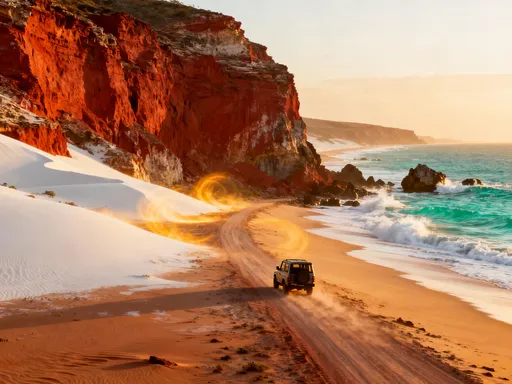
You know that feeling when the road just… disappears? That’s Kyrgyzstan. I rolled out of Bishkek in a beat-up SUV, chasing mountain passes and dusty trails, never expecting how raw and real it would feel. This isn’t just travel—it’s driving, with every bump telling a story. The terrain? Absolutely wild: sudden cliffs, gravel sweeps, rivers you actually cross. It’s not about comfort. It’s about freedom. And if you’ve ever wondered what real adventure looks like behind the wheel, this place will rewrite the rules. In a world where so much of travel is pre-packaged and predictable, Kyrgyzstan offers something increasingly rare—a journey where you are fully present, where decisions matter, and where the land speaks directly to those willing to listen. This is not a trip for the passive observer. It is for the driver who craves authenticity, for the traveler who finds clarity in challenge, and for the soul that thrives in wide-open spaces where civilization fades and nature takes command.
Leaving Bishkek: The Calm Before the Wild
Bishkek, the capital of Kyrgyzstan, greets visitors with a quiet dignity. Tree-lined avenues, faded Soviet-era buildings, and the occasional minaret rising above the skyline create a sense of calm order. Life moves at a measured pace. Markets hum with activity, but without frenzy. As I prepared to leave the city in a modest 4x4, the transition from urban life to wilderness felt almost surreal. Within thirty minutes of driving southeast, the paved roads began to unravel. The smooth asphalt gave way to packed dirt, then to loose gravel, and finally to a path that looked more like the result of animal trails than human engineering. This was not a gradual shift—it was a threshold crossed, a border between the known and the untamed.
What surprised me most was how quickly the landscape transformed. One moment, I was passing roadside dachas and small villages where children waved from wooden fences. The next, I was alone, surrounded by rolling foothills and distant peaks that shimmered in the morning light. There were no billboards, no gas stations, no signs of modern infrastructure—just the road ahead and the open sky. It was in those early miles that I understood a fundamental truth about travel in Kyrgyzstan: a 4x4 vehicle is not a luxury. It is a necessity. The terrain demands it. The weather—unpredictable even in summer—can turn a dry path into a muddy trench overnight. And with few services beyond the capital, self-sufficiency is not just ideal; it is essential. This is not a destination for rental sedans or guided bus tours. It is for those who are ready to engage with the land on its own terms.
Yet, there was a sense of liberation in that realization. The absence of comfort became a kind of clarity. Every decision—speed, route, stopping points—carried weight. There were no safety nets, no quick exits. And in that vulnerability, I began to feel more alive than I had in years. The city’s comforts, once so familiar, now seemed like distractions. Out here, driving was not just transportation. It was a practice in awareness, a dialogue between human and environment. Bishkek had been the starting point, but it was merely the prelude. The real journey began the moment the pavement ended.
The First Taste of Off-Road: Chon-Kemin Valley
My first true off-road experience unfolded in the Chon-Kemin Valley, a sweeping expanse of grasslands nestled between forested ridges and jagged peaks. The valley is part of a national park, but there are no grand entrances or ticket booths—just a fork in the road and a hand-painted sign that may or may not point in the right direction. I followed it anyway. The path quickly deteriorated into a series of ruts and washboard stretches that rattled the car and tested my grip on the wheel. There were no lane markings, no painted dividers, not even consistent GPS signals. Navigation became a mix of instinct, topographical awareness, and occasional consultation with a paper map—a skill I hadn’t used in over a decade.
What made the drive unforgettable was not just the challenge, but the life that emerged along the way. I encountered Kyrgyz herders on horseback, guiding flocks of sheep across the valley floor. Their dogs barked but did not chase. The herders nodded in quiet acknowledgment—no smiles, no words, just a shared understanding of space and movement. Later, I spotted a small band of wild horses galloping across a distant slope, their manes catching the wind like banners. In that moment, the silence returned, deeper than before. No engines, no voices, not even birdsong—just the sound of wind over grass and the occasional creak of my suspension settling.
River crossings came without warning. One stretch of the path simply disappeared into a shallow, pebble-bottomed stream. There was no bridge, no detour—just water flowing over what had once been dry land. I stopped, assessed the depth, and chose my approach carefully. The key, I learned quickly, was not speed but control. Too fast, and the tires would lose traction. Too slow, and the current might push the vehicle sideways. I angled the car slightly upstream, engaged low gear, and crept forward. The water rose to just below the door sills, but the engine held steady. On the other side, I paused, not out of fear, but out of respect. This was not a place to rush. Every crossing, every turn, every bump in the road required attention. And in return, the land offered something rare: presence. No distractions, no notifications, no demands—just the moment, the machine, and the earth beneath the wheels.
High-Altitude Challenges: Climbing to Ala-Archa Pass
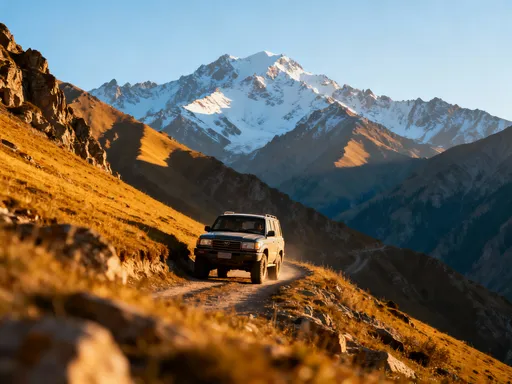
The ascent to Ala-Archa Pass is not for the faint of heart. Located just south of Bishkek, the route climbs over 3,000 meters in elevation, winding through a narrow gorge before opening onto alpine meadows and snow-covered ridgelines. The air grows thinner with every kilometer. The engine, once responsive on flat ground, now labors with each gear shift. Diesel, I had been advised, performs better at altitude than gasoline—less prone to vapor lock, more torque in low-oxygen conditions. That advice proved invaluable. As the road narrowed and the switchbacks grew sharper, I relied on the vehicle’s low-range gearing to maintain control. There were no guardrails, no barriers between the edge of the road and the steep drop below. One misjudged turn could mean disaster.
What made the climb so demanding was not just the physical terrain, but the mental discipline it required. Blind curves, loose gravel, and sudden rockfalls meant that full attention was non-negotiable. I learned to scan the road ahead, to anticipate changes in traction, and to respect the mountain’s rhythm. Speed was not an asset here. Patience was. I passed other 4x4s—some locals, some fellow travelers—each moving with deliberate caution. No one honked. No one rushed. There was a shared understanding that this road did not tolerate arrogance. It rewarded humility, preparation, and respect.
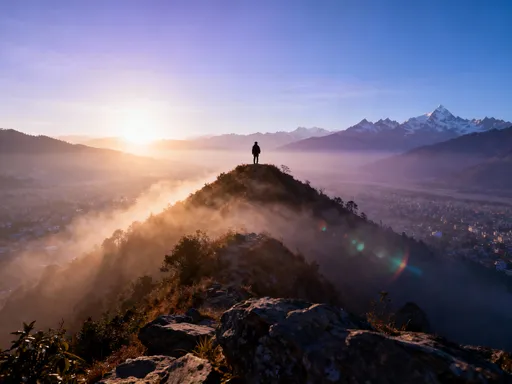
And then, at the summit, the view unfolded like a revelation. Snow-draped peaks stretched in every direction, their flanks still holding winter long after the valleys had greened. Glaciers gleamed in the sunlight. The sky was an intense, almost unreal blue. I stepped out of the car, the cold air sharp in my lungs, and stood in silence. There was no one else around. No crowds, no souvenir stands, no marked viewpoints—just raw, untouched beauty. In that moment, the effort of the climb made perfect sense. This was not a destination you could reach by cable car or tour bus. It had to be earned. And by driving it myself—by feeling every turn, every elevation gain, every shift in the air—I felt a deeper connection to the place than I ever could have from a passenger seat. The mountain had tested me, and in passing, it had given me a gift: perspective.
River Crossings: When the Road Becomes Water
In Kyrgyzstan, rivers are not obstacles to be avoided—they are part of the journey. Mountain streams, fed by melting snow, cut across trails with no regard for convenience. What looks like a dry riverbed in the morning can become a rushing channel by afternoon. And in many places, the only way forward is straight through. River crossings are not optional detours; they are integral to off-road travel in this region. But they are also among the most dangerous. A misstep can mean a stalled engine, a swept-away vehicle, or worse. I learned this the hard way on a remote stretch between two highland valleys.
What appeared to be a shallow crossing turned out to be deeper than expected. The current, swift and cold, tugged at the wheels. I had approached at a steady pace, angled upstream, and kept the engine running high enough to prevent water from entering the exhaust. But halfway across, the rear tire lost grip on a submerged rock. The car slid sideways, water surging toward the air intake. I reacted instantly—reversing slightly, regaining traction, and correcting my angle. It lasted less than ten seconds, but it felt like an eternity. When I finally reached the opposite bank, I sat still for several minutes, heart pounding, hands still on the wheel. It was not fear that held me there, but reflection. That moment taught me more about off-road driving than any manual ever could.
Since then, I’ve developed a strict protocol for river crossings. First, I scout the path on foot whenever possible, checking depth, current strength, and bottom composition. Pebbles and gravel provide better grip than silt or mud. I always approach at a 45-degree angle upstream to minimize lateral force. I keep the engine in low gear, maintain a slow, steady speed, and never stop mid-crossing. And I never attempt a crossing if the water level reaches the bottom of the doors. These are not suggestions—they are survival rules. But beyond technique, the experience taught me a deeper lesson: in wild terrain, confidence must be balanced with caution. Overconfidence kills. Respect for the environment—its power, its unpredictability—is the most important tool a driver can carry.
The Secret of the Tien Shan: Remote Trails Beyond Maps
The Tien Shan mountain range, which spans much of Central Asia, is one of the last great wildernesses on the planet. In Kyrgyzstan, its peaks rise like sentinels, guarding valleys that see fewer visitors in a year than some city parks do in a day. It was here, far from marked trails and tourist routes, that I discovered the true essence of self-driving adventure. GPS signals flickered and failed. Paper maps became approximations. And navigation relied increasingly on terrain intuition—reading the slope of the land, following animal tracks, recognizing landmarks from distant memories or local stories.
One such journey took me to a high-altitude lake nestled in a glacial basin. There were no signs, no trails, no other vehicles. I followed a faint track used by shepherds in summer, climbing steadily through alpine meadows and rocky passes. The silence was profound. No planes, no engines, not even the hum of insects. Just wind, water, and the occasional call of a distant bird. When I finally reached the lake, its surface mirrored the surrounding peaks in perfect stillness. I set up camp on the shore, lit a small fire, and watched the stars emerge one by one. There was no phone signal. No way to contact the outside world. And for the first time in years, I did not want to.
This kind of isolation is not for everyone. It requires preparation, resilience, and a willingness to be alone with your thoughts. But for those who seek it, it offers something increasingly rare: authenticity. In these remote corners of the Tien Shan, travel is not about ticking boxes or collecting photos. It is about presence. It is about moving through the world at a human pace, guided not by algorithms or itineraries, but by instinct and observation. The mountains do not care about your schedule. They do not respond to demands. But if you listen, they will teach you. And what they teach—patience, humility, awareness—is not just useful for driving. It is useful for living.
Practical Lessons from the Dirt: What You Actually Need
After months of driving through Kyrgyzstan’s highlands, I’ve learned that preparation is everything. The romance of the open road fades quickly when you’re stranded with a flat tire and no spare. Self-driving in this terrain is not about heroics—it’s about practicality. A well-prepared vehicle is your lifeline. I now carry two spare tires, a full toolkit, a heavy-duty jack, recovery straps, and a portable air compressor. Diesel fuel is preferred not only for its performance at altitude but also because it is more widely available in rural areas. Fuel stations are sparse, sometimes hundreds of kilometers apart, so I plan every liter. I never start a remote route with less than a full tank, and I carry extra fuel in approved containers.
Local knowledge is equally important. Mechanics in small towns often know more about the roads than any GPS. I’ve learned to stop and ask—politely, patiently—before setting out. Many drivers, especially older Kyrgyz men who have spent their lives navigating these trails, are happy to share advice. They’ll tell you which passes are blocked by snow, which riverbeds are safe to cross, and which villages have fuel. These conversations, conducted in broken Russian or through gestures, have saved me time and trouble more than once. I’ve also learned to carry essentials: warm clothing, food, water, a first-aid kit, and a satellite communicator for emergencies. In areas with no signal, it’s the only way to call for help.
But beyond gear and planning, the most important preparation is mental. You must accept that things will go wrong. Tires will puncture. Routes will be unclear. Weather will change without warning. The key is not to avoid problems, but to expect them and respond calmly. I’ve seen travelers panic over minor setbacks—refusing to continue, demanding rescue—only to realize later that they had everything they needed to solve the issue themselves. Self-driving in Kyrgyzstan is as much about mindset as it is about mechanics. It rewards patience, adaptability, and a willingness to embrace the unexpected. When you learn to see obstacles not as failures but as part of the journey, the road becomes not just passable, but meaningful.
Why This Kind of Driving Changes You
There is a rhythm to mountain driving that reshapes the way you think. Time slows. Decisions matter. Distractions fall away. In the city, driving is often a chore—a series of red lights, honking horns, and hurried commutes. But in the wild terrain beyond Bishkek, it becomes something else entirely: a form of meditation, a practice in focus and presence. Every turn requires attention. Every sound from the engine tells a story. You learn to listen—to the land, to the machine, to yourself.
What surprised me most was how this experience changed my relationship with independence. In daily life, self-reliance often feels like a burden—something we boast about but secretly dread. But out here, it felt like freedom. There was no one to call, no one to rescue me. And in that solitude, I discovered a quiet confidence. I could fix a flat. I could navigate without GPS. I could cross a river and climb a pass and find my way home. These were not grand achievements, but they were mine. And they reminded me that capability is not about strength, but about practice, patience, and persistence.
Bishkek is not the destination. It is the doorway. Beyond it lies a world where the road disappears and the journey begins in earnest. It is a world of raw beauty, quiet challenge, and profound connection. Driving through Kyrgyzstan’s wild terrain did not just show me new landscapes—it changed the way I see myself. It taught me that adventure is not about escaping life, but about engaging with it more deeply. And if you ever find yourself on an unpaved road with the city far behind, remember this: the best journeys are not the ones that go smoothly. They are the ones that ask something of you—and in return, give you back a version of yourself you didn’t know was waiting.