You Gotta See These Hidden Spots in Nicosia – My Check-In Adventure
Nicosia isn’t just the capital of Cyprus—it’s a city where ancient walls meet modern vibes, and every alley tells a story. I recently checked in to explore its scenic heart, and honestly? I was blown away by how much beauty hides in plain sight. From sunlit courtyards to quiet viewpoints, Nicosia surprised me at every turn. The rhythm of life here is unhurried, yet full of depth—locals greet each other by name, cats nap on sun-warmed stone steps, and centuries-old buildings stand shoulder to shoulder with cozy cafes. This is real, unfiltered travel—no filters, just feels. What I discovered wasn’t on every tourist map, but it stayed with me long after I left.
First Impressions: Stepping Into a Divided Capital
Nicosia greets you not with fanfare, but with a quiet dignity that unfolds gradually. As the last divided capital in Europe, it carries a unique presence—one shaped by history, yet focused on coexistence. Arriving from the south, I crossed through the Ledra Palace checkpoint, a transition that felt symbolic more than political. On one side, the Republic of Cyprus; on the other, the Turkish Cypriot-administered area. But within the city’s heart, especially along the central buffer zone, there’s a palpable sense of calm. The atmosphere is welcoming, even gentle, as if the city itself has learned to breathe steadily through decades of complexity.
What struck me most was how normal daily life feels, despite the division. Children walk to school near barricades softened by flowering vines. Elderly men sip coffee at sidewalk tables, discussing the weather or football, not borders. The streets are clean, the pace relaxed. Unlike busier Mediterranean capitals like Athens or Valletta, Nicosia doesn’t rush to impress. It simply *is*. There’s no overwhelming tourist infrastructure—no double-decker buses or crowded souvenir stalls—just a lived-in authenticity that feels rare in today’s travel landscape.
What sets Nicosia apart from other island destinations is its layered identity. It’s not just Greek or Turkish, Orthodox or Muslim—it’s both, and neither, all at once. This duality isn’t performative; it’s woven into the city’s architecture, cuisine, and conversations. You taste it in the flaky pastries sold in both communities, hear it in the call to prayer mingling with church bells, and see it in the bilingual street signs. For travelers seeking depth over dazzle, Nicosia offers a quiet revelation: beauty often thrives not in perfection, but in resilience.
The Old Town Pulse: Where History Meets Daily Life
At the core of Nicosia lies its Old Town, encircled by the imposing 16th-century Venetian Walls. Walking through these stone fortifications, originally built to fend off Ottoman invasions, feels like stepping into a living museum—one where history isn’t behind glass, but part of everyday life. The five main gates still stand, each with its own character. Famagusta Gate, once a military stronghold, now opens to a peaceful garden. Kyrenia Gate, smaller and more intimate, leads into quieter residential lanes where laundry flaps gently above cobblestone streets.
But the true heartbeat of the Old Town is Ledra Street, a pedestrian thoroughfare that cuts through the center and crosses the Green Line. While many visitors see it as just a shopping strip lined with international brands, dig a little deeper and you’ll find its soul. Side alleys branch off like capillaries, leading to tucked-away bakeries where elderly women buy warm loaves wrapped in paper, or to tiny hardware shops where the owner remembers your face after just one visit. It’s in these moments—sipping frappé at a corner kiosk, watching a street musician tune his guitar—that Nicosia reveals its warmth.
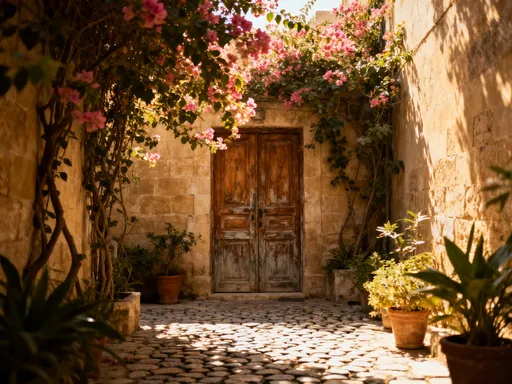
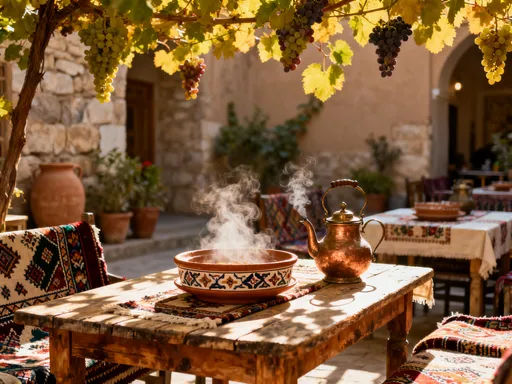
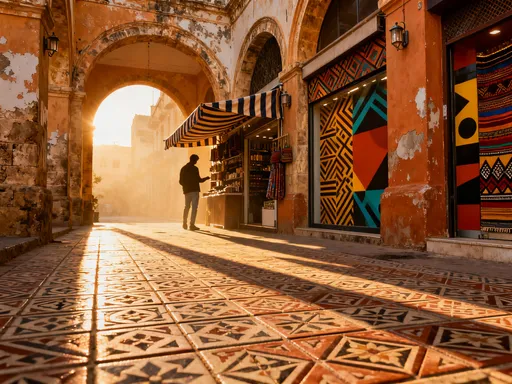
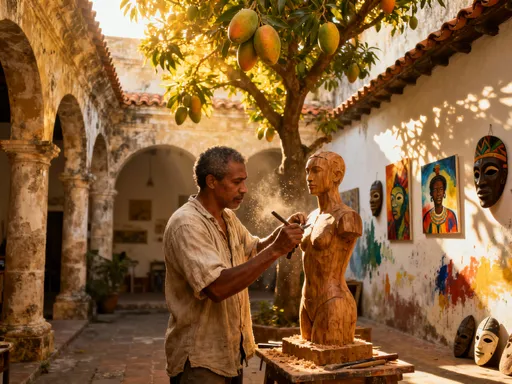
One of the most enchanting discoveries was the network of hidden courtyards tucked behind unassuming doors. Many of these date back to the Ottoman era, when homes were built around central open spaces for privacy and cooling. Today, some have been restored into cultural centers, while others remain private family spaces. I was lucky enough to be invited into one by a local artisan who runs a ceramic studio there. The courtyard was shaded by a grapevine, with potted herbs lining the edges and a fountain trickling softly in the corner. This wasn’t staged for tourists—it was real life, unfolding gently in the shade.
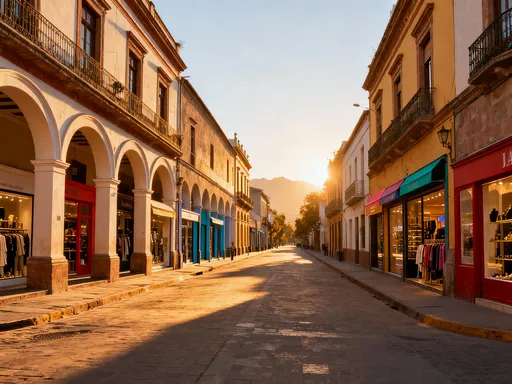
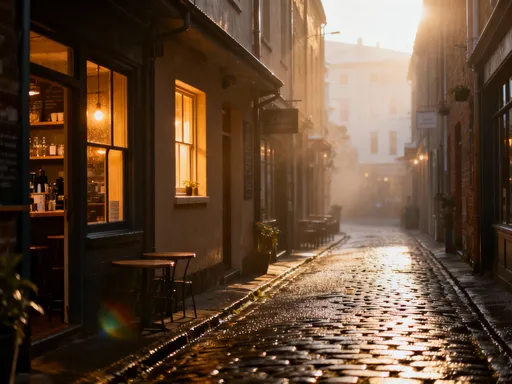
The architecture throughout the Old Town tells a story of adaptation. Houses with arched doorways and wooden balconies sit beside restored churches and former mosques. Colorful front doors—deep blues, warm terracottas, olive greens—add quiet vibrancy. There’s no forced uniformity; instead, there’s harmony in contrast. Walking these streets, I realized that Nicosia’s charm isn’t in grand monuments, but in the details: the way sunlight hits a stone wall at 4 p.m., the sound of a door creaking open, the scent of jasmine drifting from a hidden garden.
Green Escapes: Parks and Riverfront Serenity
In a city shaped by stone and history, green spaces are not just decorative—they’re essential. Nicosia may not have beaches, but it offers a different kind of retreat: urban oases where locals unwind and nature finds its foothold. One of my most peaceful moments came along the banks of the Pedieos River, which flows quietly through the city. Once neglected, the riverfront has been transformed into a landscaped path perfect for walking, cycling, or simply sitting on a bench with a book.
On weekday evenings, I noticed families strolling with children, couples sharing ice cream, and older residents feeding pigeons. There’s no rush here—just a shared appreciation for stillness. The river itself is often dry, but the surrounding park is lush with oleander, cypress, and flowering shrubs. Benches are strategically placed to catch the breeze, and small bridges offer gentle vantage points. It’s not dramatic scenery, but it’s deeply restorative. For someone used to the sensory overload of big cities, this quiet stretch felt like a balm.
Another favorite was the Famagusta Gate Gardens, a beautifully restored green space just outside the city walls. Arriving at golden hour, I found the sunlight casting long shadows across manicured lawns and ancient stonework. The contrast between the fortress-like gate and the delicate flower beds was striking. Couples posed for photos, children chased butterflies, and a group of retirees played backgammon under a pergola. This garden is more than ornamental—it’s a symbol of renewal. Once a militarized zone, it’s now a place of leisure and connection, proof that even the most contested spaces can be reclaimed for peace.
What impressed me most was how integrated these green areas are into daily life. Unlike parks in some cities that feel like afterthoughts, Nicosia’s green spaces are woven into the city’s rhythm. They’re not just for weekends or tourists—they’re where people go after work, where grandparents meet grandchildren, where solitude and community coexist. Urban planning here doesn’t shout; it whispers. And in that quiet, it creates spaces where well-being grows as naturally as the trees.
Check-In Views: Best Spots for That Perfect Photo
In the age of social media, we’re trained to chase the iconic shot—the Eiffel Tower at dusk, the Colosseum lit up at night. But in Nicosia, the most memorable views aren’t the obvious ones. They’re found in stillness, in corners where light falls just right, and where the background isn’t a crowd but a centuries-old wall. I didn’t come here for Instagram fame, but I left with photos that felt more meaningful than any filter could create.
One of my favorite vantage points was a rooftop café near Sarayönü Square. Climb the narrow stairs, order a carafe of local wine, and you’re rewarded with a panoramic view of the city’s skyline—minarets, church domes, and terracotta rooftops stretching into the distance. At sunset, the light turns everything golden, and the air fills with the soft hum of conversation and distant music. This isn’t a tourist trap; it’s a place where locals celebrate birthdays and friends reunite. The atmosphere enhances the view, making the photo not just a picture, but a memory.
Another quiet gem is a small terrace near St. Sophia Cathedral, now the Selimiye Mosque. Accessible through a modest doorway, this elevated platform offers a rare, unobstructed look over the northern part of the city. I visited early in the morning, when the streets were still damp from the night’s watering and the only sound was a bird singing from a nearby fig tree. No queues, no vendors, just pure stillness. The composition was simple—a stone arch framing the rising sun—but the feeling was profound.
What I learned is that the best scenic spots aren’t always the most famous. They’re the ones where you can breathe, where the light changes slowly, and where you feel like you’re seeing the city on its own terms. Crowds can add energy, but they can also obscure the details. In Nicosia, I found that beauty often reveals itself in solitude. A single window with flower boxes, a shadow on a cobblestone path, the reflection of a clock tower in a puddle—these were the images that stayed with me. Because sometimes, the most powerful photo isn’t the one you take, but the one you carry in your mind.
Beyond the Center: Quiet Corners Only Locals Know
Every city has its postcard spots, but the soul of a place is usually found off the main path. In Nicosia, I made it my mission to wander without a map, to follow cats down alleys, and to stop when something felt interesting. One of my most cherished discoveries was a small plaza tucked behind a neighborhood bakery in the Paphos Gate area. There were no signs, no benches, just a circle of old houses around a single olive tree. An elderly woman sat on her doorstep, shelling beans into a bowl. When I smiled, she offered me a cup of mint tea. We didn’t share a language, but we shared the moment.
Another unexpected experience was walking through the Greek Orthodox cemetery near Ayia Sophia. I approached with respect, mindful of the sanctity of the space, and found it not eerie, but peaceful. Marble headstones, some over a century old, were adorned with photographs and fresh flowers. Birds flitted between cypress trees, and sunlight filtered through the branches. It wasn’t a tourist attraction—it was a place of remembrance, tended with love. I walked slowly, quietly, feeling the weight of history and the tenderness of memory. This wasn’t about spectacle; it was about presence.
Slowing down changed how I saw the city. Instead of checking off landmarks, I began to notice patterns—the way shopkeepers lower wooden shutters at noon for a long lunch, how neighbors call out greetings from balconies, how a stray cat always seems to know where the best sunspot is. These small rhythms create a sense of belonging, even for a visitor. I realized that connection doesn’t come from seeing everything, but from seeing deeply. When you pause long enough, a city starts to speak—not in words, but in gestures, light, and silence.
One afternoon, I followed the sound of hammering to a hidden workshop where an elderly craftsman was restoring a wooden door. He invited me in, showed me his tools, and explained (through gestures and broken English) how each piece was hand-carved. I bought a small olive wood spoon as a keepsake, not because I needed it, but because it carried his care. These are the moments no guidebook can promise, but they’re the ones that shape a journey. In Nicosia, I learned that getting lost isn’t a mistake—it’s a way of finding what matters.
Culture in the Air: Art, Music, and Street Life
Culture in Nicosia doesn’t announce itself with billboards or ticketed events. It’s in the air, subtle and continuous, like the scent of thyme on a summer breeze. You’ll find it in the hand-painted signs above family-run shops, in the murals that blend into alley walls, and in the spontaneous music that drifts from open windows. This isn’t curated culture—it’s lived culture, passed down and reimagined.
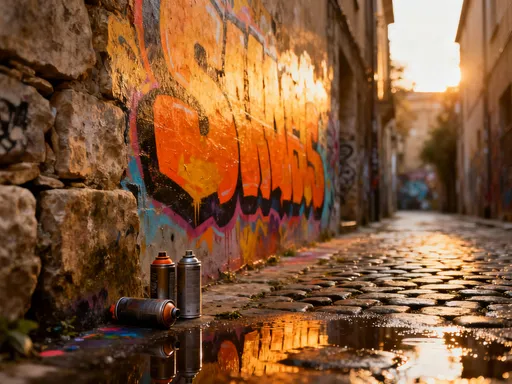
Street art in Nicosia is understated but meaningful. Unlike cities where murals scream for attention, here they often appear quietly—a portrait of a grandmother on a backstreet, a geometric pattern inspired by traditional lace, a poem in Greek and Turkish painted beside a gate. Some are political, but most are personal, celebrating everyday life. I spent an afternoon following an unofficial walking route marked by small art installations—ceramic tiles embedded in sidewalks, a rusted bicycle turned into a sculpture, a mailbox repurposed as a free book exchange. These touches don’t dominate the city; they enrich it.
One evening, I followed the sound of oud music to a courtyard café near the Arab Ahmet district. The musician wasn’t performing for tourists—he was playing for himself, eyes closed, fingers moving over the strings with quiet devotion. A few locals sat at tables, sipping tea, nodding along. I sat at the edge, not wanting to intrude, but welcomed by the music. The melody was melancholic yet warm, full of longing and resilience. It reminded me that art here isn’t entertainment; it’s a form of expression, a way of holding onto identity.
The blend of Greek and Turkish influences is evident not just in music, but in daily rituals. You’ll see both communities celebrating name days, baking similar pastries with slight variations, and gathering in the evenings for long meals. The rhythm of life is unhurried, valuing conversation over convenience. Even in the busiest parts of the city, there’s a sense of continuity—a respect for tradition that doesn’t reject modernity, but absorbs it gently. In Nicosia, culture isn’t something you consume; it’s something you absorb, like sunlight through old glass.
Traveler’s Toolkit: Practical Tips for Your Own Nicosia Check-In
Planning a visit to Nicosia? A few practical insights can make your experience smoother and more meaningful. First, timing matters. The best months to visit are April to early June and September to October, when temperatures are mild and the light is soft—perfect for walking and photography. July and August can be very hot, often exceeding 35°C, so if you visit then, plan outdoor activities for early morning or late afternoon.
Getting around is easy and affordable. The city center is compact and entirely walkable. Wear comfortable shoes—cobblestones are charming but tiring. For longer distances, the local bus system is reliable and inexpensive. There’s also a growing network of bike lanes, and several shops offer bicycle rentals by the hour or day. Cycling along the Pedieos River path is a delightful way to see the city from a different angle.
When it comes to accommodation, I recommend staying in or near the Old Town. Family-run guesthouses and boutique hotels offer more character than chain hotels, and many are housed in restored historic buildings. Look for places with rooftop terraces or inner courtyards—they provide quiet retreats after a day of exploring. Booking in advance is wise during spring and autumn, as Nicosia attracts increasing numbers of cultural travelers.
As for dining, embrace local flavors. Try souvlaki wrapped in pita, halloumi grilled with lemon and herbs, and loukoumades drizzled with honey. Many of the best eateries are small, unassuming spots—ask locals for recommendations. And don’t rush meals. In Nicosia, eating is a social act, meant to be enjoyed slowly. Finally, carry a small map or use an offline app, but don’t be afraid to get lost. Some of the best discoveries happen when you wander without a plan.
Conclusion
Nicosia isn’t flashy, but it’s deeply felt. Its scenic spots aren’t just about views—they’re about moments, textures, and the quiet pride of a city living between worlds. This check-in taught me that beauty often hides in stillness. It’s in the way an old man sweeps his doorstep at dawn, in the laughter from a hidden courtyard, in the way sunlight rests on a stone wall like a blessing. Nicosia doesn’t demand your attention; it earns it, slowly and sincerely. For travelers who value authenticity over spectacle, who seek connection over convenience, this city offers something rare: a sense of place that lingers long after you’ve left. Go see it for yourself—not to tick a box, but to feel, to listen, to remember. Because some cities don’t just show you their sights. They show you a different way of being.